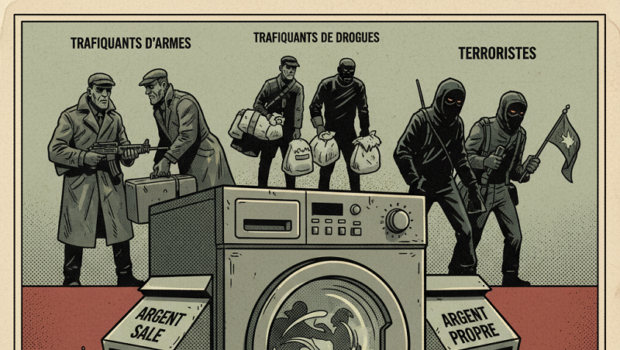
Djibouti : Guelleh signe un projet minier à 50 millions de dollars US avec des sociétés apparaissant dans Paradise Papers


Le 21 février 2026, les autorités djiboutiennes ont annoncé en grande pompe la signature d’un accord minier de plus de 50 millions de dollars avec la société TZE KUEN. Présenté comme « stratégique » pour accélérer le développement du secteur extractif, le projet soulève pourtant de graves interrogations. À la lecture du mémoire juridique publié par l’Union Djiboutienne pour les Droits Économiques, Sociaux et Culturels (UDDESC), l’affaire apparaît moins comme une opportunité économique que comme un concentré d’opacité institutionnelle.
Lien de téléchargement: https://drive.google.com/file/d/1nHPy9jITq_Osp4Ezf7sAfVWdaLkqQ8p2/view?usp=sharing
Au sommet de l’État, le président Ismaïl Omar Guelleh, au pouvoir depuis 1999, incarne un système politique mafieux et hypercentralisé. Ce nouveau contrat minier, loin de rassurer, semble illustrer les dérives structurelles d’un régime où la transparence reste l’exception.
Un accord sans contenu vérifiable
Premier constat accablant : l’absence d’informations essentielles. Ni la localisation des sites miniers concernés, ni la nature des minerais visés, ni les études géologiques préalables ne sont rendues publiques. Aucun détail précis sur la répartition des 50 millions de dollars n’a été communiqué.
Dans tout État respectant les standards minimaux de gouvernance, un projet extractif de cette ampleur s’accompagne d’études d’impact environnemental, de consultations publiques et d’un processus d’appel d’offres transparent. Ici, rien de tel. L’accord a été attribué directement, sans trace d’une procédure compétitive ouverte.
Cette opacité n’est pas un détail technique : elle empêche tout contrôle parlementaire, judiciaire ou citoyen sur l’usage des fonds publics.
Une société liée aux Paradise Papers
Le mémoire souligne un élément particulièrement troublant : la société TZE KUEN apparaît dans la base de données des Paradise Papers, révélée par le Consortium international des journalistes d’investigation. Ces documents ont mis en lumière l’usage de structures offshore pour l’évasion fiscale et le blanchiment d’argent à l’échelle mondiale.
Contracter un accord public de 50 millions de dollars avec une entité associée à des circuits offshores opaques soulève des questions évidentes de diligence raisonnable. Qui sont les bénéficiaires effectifs de TZE KUEN ? Quelles vérifications ont été effectuées avant la signature ? Les autorités restent silencieuses.
Dans un contexte où Djibouti affirme avoir renforcé son arsenal anti-blanchiment, ce silence fragilise la crédibilité officielle.
Le rôle controversé d’Électricité de Djibouti
Autre point central : le financement du projet via Électricité de Djibouti (EDD), entreprise publique stratégique chargée de la production et de la distribution d’énergie. Selon les déclarations officielles citées dans le mémoire, EDD devrait mobiliser les 50 millions de dollars via la création d’une « société de projet locale ».
Pourquoi une entreprise d’électricité financerait-elle un projet minier dont ni les contours ni les retombées ne sont clairement établies ? Cette décision interroge sur un possible détournement de l’objet social d’EDD et sur un contournement du contrôle budgétaire classique.
En passant par une structure ad hoc, qualifiée de « quasi-offshore » par les auteurs du mémoire, l’État éviterait un débat parlementaire approfondi sur l’engagement de fonds publics considérables.
Des précédents inquiétants
Le document établit un parallèle avec d’autres montages financiers controversés impliquant des entités publiques djiboutiennes. Il évoque notamment des sociétés créées par décret présidentiel, accusées d’avoir servi de vecteurs à des flux financiers peu transparents.
Ces précédents alimentent la thèse d’un schéma récurrent : création d’une entité spécifique, mélange de fonds publics et de partenaires privés opaques, absence de contrôle indépendant.
Dans un système dominé depuis plus de deux décennies par Ismaïl Omar Guelleh, la concentration des décisions économiques stratégiques autour de l’exécutif renforce le soupçon d’une gouvernance personnalisée.
Risques sécuritaires et double usage
Le mémoire va plus loin en soulevant un risque sécuritaire : l’exploitation minière nécessite l’importation d’explosifs et d’équipements à double usage. Sans localisation précise des sites et sans mécanisme de contrôle transparent, comment garantir que ces matériels ne soient pas détournés ?
Djibouti occupe une position géostratégique sensible, au cœur d’une région marquée par les conflits au Yémen et en Somalie. Toute faille dans le contrôle des flux d’armements ou de matériaux sensibles pourrait avoir des conséquences régionales majeures.
Crédibilité internationale en jeu
Djibouti tire une part importante de ses revenus de sa position stratégique et de ses partenariats internationaux. Bases militaires étrangères, investissements portuaires, coopération sécuritaire : la stabilité du pays est un argument central.
Mais la stabilité ne saurait remplacer la transparence. À l’heure où les normes internationales en matière de lutte contre la corruption et de transparence des bénéficiaires effectifs se durcissent, un projet aussi flou expose le pays à un risque de réputation significatif.
Si le gouvernement est convaincu de la solidité et de la légalité de cet accord, il lui appartient de publier l’intégralité des clauses contractuelles, les études techniques et l’identité des bénéficiaires effectifs impliqués.
Une nouvelle possibilité de détourner les fonds publics pour le régime
Le projet minier TZE KUEN constitue une nouvelle possibilité majeure de détourner les fonds publics pour le pouvoir d’Ismaïl Omar Guelleh. En l’absence de transparence, le doute prospère. Et dans un pays où l’alternance politique est inexistante depuis 27 ans, chaque zone d’ombre supplémentaire fragilise un peu plus la confiance entre gouvernants et gouvernés.
La balle est désormais dans le camp des autorités : lever le voile, ou assumer les conséquences politiques et internationales d’un projet qui, à ce stade, apparaît comme l’un des plus opaques de l’histoire économique récente de Djibouti.
Hassan Cher
The English translation of the article in French.
Djibouti: Guelleh Signs a US$50 Million Mining Project with Companies Appearing in the Paradise Papers
On February 21, 2026, Djiboutian authorities announced with great fanfare the signing of a mining agreement worth more than US$50 million with the company TZE KUEN. Presented as “strategic” in accelerating the development of the extractive sector, the project nevertheless raises serious concerns. According to a legal memorandum published by the Djiboutian Union for Economic, Social and Cultural Rights (UDDESC), the deal appears less as an economic opportunity than as a striking example of institutional opacity.
At the top of the state, President Ismaïl Omar Guelleh, in power since 1999, embodies what critics describe as a mafia-style and hyper-centralized political system. Far from providing reassurance, this new mining contract seems to illustrate the structural flaws of a regime where transparency remains the exception rather than the rule.
Download link: https://drive.google.com/file/d/1nHPy9jITq_Osp4Ezf7sAfVWdaLkqQ8p2/view?usp=sharing
An Agreement Without Verifiable Substance
The first alarming observation is the absence of essential information. Neither the location of the mining sites concerned, nor the nature of the targeted minerals, nor any prior geological studies have been made public. No precise details have been disclosed regarding the allocation of the US$50 million.
In any state adhering to minimum governance standards, an extractive project of this scale would be accompanied by environmental impact assessments, public consultations, and a transparent public tender process. In this case, none of these elements are evident. The agreement was awarded directly, with no trace of an open and competitive bidding procedure.
This opacity is not a minor technical issue: it effectively prevents parliamentary, judicial, or citizen oversight over the use of public funds.
A Company Linked to the Paradise Papers
The memorandum highlights a particularly troubling element: TZE KUEN appears in the Paradise Papers database, revealed by the International Consortium of Investigative Journalists. These documents exposed the global use of offshore structures for tax evasion and money laundering.
Entering into a US$50 million public agreement with an entity associated with opaque offshore networks raises obvious due diligence concerns. Who are the ultimate beneficial owners of TZE KUEN? What background checks were conducted prior to signing? The authorities have remained silent.
At a time when Djibouti claims to have strengthened its anti-money laundering framework, this silence undermines official credibility.
The Controversial Role of Électricité de Djibouti
Another central issue concerns the financing of the project through Électricité de Djibouti (EDD), the state-owned company responsible for electricity production and distribution. According to official statements cited in the memorandum, EDD is expected to mobilize the US$50 million through the creation of a “local project company.”
Why would an electricity utility finance a mining project whose scope and expected returns remain undefined? This decision raises questions about a possible diversion from EDD’s statutory mandate and a circumvention of standard budgetary oversight.
By channeling funds through an ad hoc structure described as “quasi-offshore” by the memorandum’s authors, the state would effectively avoid an in-depth parliamentary debate on the commitment of substantial public resources.
Troubling Precedents
The document draws parallels with other controversial financial arrangements involving Djiboutian public entities. It refers in particular to companies created by presidential decree that were allegedly used as vehicles for opaque financial flows.
These precedents reinforce the thesis of a recurring pattern: the creation of a specific entity, the blending of public funds with opaque private partners, and the absence of independent oversight.
In a system dominated for more than two decades by Ismaïl Omar Guelleh, the concentration of strategic economic decision-making within the executive branch fuels suspicions of personalized governance.
Security Risks and Dual-Use Concerns
The memorandum goes further by raising security concerns. Mining operations require the importation of explosives and dual-use equipment. Without clearly identified sites and transparent control mechanisms, how can authorities ensure that such materials are not diverted?
Djibouti occupies a highly sensitive geostrategic position, at the heart of a region marked by conflicts in Yemen and Somalia. Any weakness in the oversight of arms flows or sensitive materials could have major regional consequences.
International Credibility at Stake
Djibouti derives a significant portion of its revenues from its strategic location and international partnerships. Foreign military bases, port investments, and security cooperation are central pillars of the country’s economic model.
However, stability cannot substitute for transparency. At a time when international standards on anti-corruption and beneficial ownership transparency are tightening, such a vague and opaque project exposes the country to substantial reputational risk.
If the government is confident in the soundness and legality of this agreement, it should publish the full contractual clauses, the technical studies, and the identities of the ultimate beneficial owners involved.
A New Opportunity to Divert Public Funds?
The TZE KUEN mining project represents a significant new opportunity for the regime of Ismaïl Omar Guelleh to divert public funds. In the absence of transparency, doubt inevitably grows. In a country where no political alternation has occurred for 27 years, each additional zone of opacity further erodes trust between the governed and those in power.
The responsibility now lies with the authorities: lift the veil of secrecy, or accept the political and international consequences of a project that, at this stage, appears to be one of the most opaque economic undertakings in Djibouti’s recent history.
Hassan Cher


 Next Article
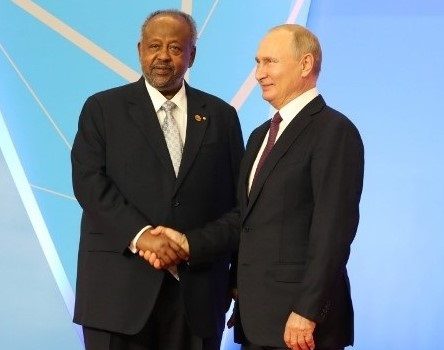 Djibouti/Russie : Ismaël Omar Guelleh et les sociétés financières opaques russes en Afrique de l’Est.
  Éthiopie/Djibouti/Somalie : Le Daesh somalien ouvrir sa filiale en Éthiopie grâce au soutien financier d’Ismaël Omar Guelleh.
  Djibouti/Somaliland : Boreh, Acquitté à Londres, Piégé à Hargeisa ? Les Dessous d’un Scandale d’État
 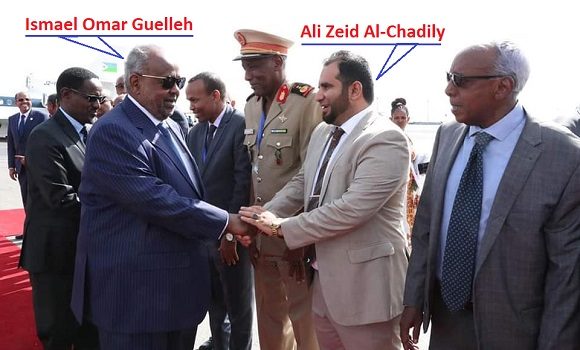 Djibouti : le député Ali Zeid Al-chadily, passe au grade d’Underboss dans la mafia djibouto-somalienne pour ses résultats positifs dans les trafics…
  Penguins Are So Lovely & I Want One
  Djibouti/Somalie : La branche Habar-Awale/Isaaq de la mafia djibouto-somalienne et sa connexion avec les islamistes de la Corne.
  Djibouti, le Brésil et les Houthis : quand les achats d’armes de la présidence djiboutienne nourrissaient déjà les réseaux clandestins du terrorisme
  Djibouti : L’explosion d’hier soir à Djibouti-ville et la proximité du couple Guelleh/Kadra avec les extrémistes religieux salafistes.