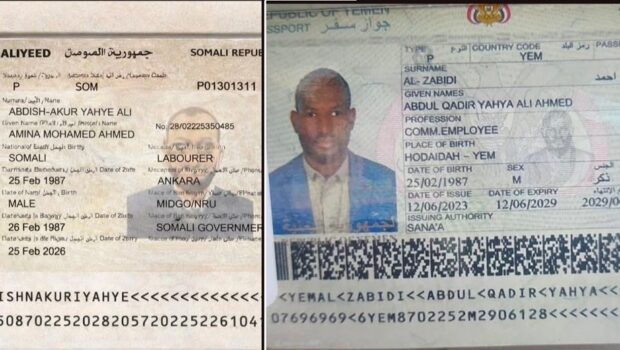
Somali : ABDUL QADIR YAHYA ALI AHMED « AL-ZABIDI » éliminé par attaque de drone à Al Ghaydah, au Yémen le 12/2/2026.

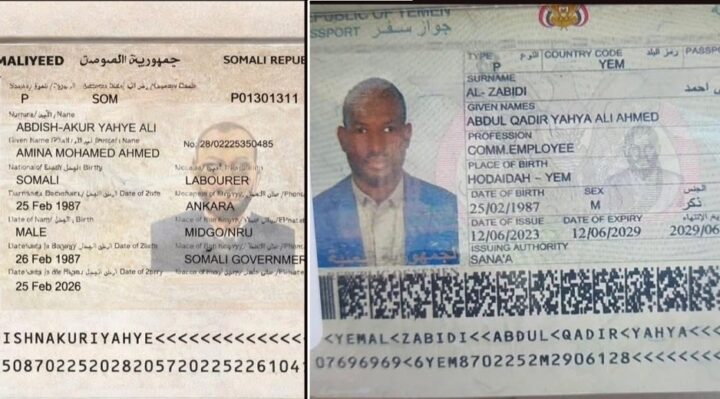
Les doubles identités d’Abdulqdir Yahya Ali « Al-Zabidi » ou ABDISH-AKUR YAHYE ALI.
| Données | Somaliennes | Yéménites |
| numéro de passeport | P01301311 | 07696969 |
| Prénom et Nom de famille | ABDISH-AKUR YAHYE ALI | ABDUL QADIR YAHYA ALI AHMED « AL-ZABIDI » |
| Prénom et nom de sa mère | AMINA MOHAMED AHMED | |
| Nationalité | Somalienne | Yéménite |
| Date de naissance | 25 février 1987 | 25 février 1987 |
| Lieu de naissance | ANKARA | HODAIDAH – YEM |
| Numéro d’identification national | 28/02225350485 | |
| Date d’émission | 26 février 1987 | 12/06/2023 |
| Date d’expiration | 25 février 2026 | 12/06/2029 |
| autorité émettrice | SOMALI GOVERNMENT | SANA’A/REPUBLIC OF YEMEN |
Jeudi 12 février 2026, une frappe de drone a tué Abdul Shakur Yahya Ali, plus connu sous l’alias Abdul Qadir Yahya Ali Ahmed « Al-Zabidi », dans la ville côtière d’Al Ghaydah, capitale du gouvernorat d’Al-Mahra (à l’Est du Yémen). L’attaque, ciblant une Toyota Corolla stationnée sur la corniche de la ville, a mis fin aux activités d’un trafiquant d’armes opérant au carrefour de réseaux terroristes régionaux. L’homme éliminé incarnait une double identité stratégique. Cette dualité documentaire, confirmée par ses deux passeports ci-joints, révèle un schéma institutionnalisé de couverture offerte par les Houthis à des éléments étrangers.
Selon des rapports sécuritaires, la victime effectuait régulièrement des allers-retours entre le Yémen, Djibouti et la Somalie. Dans ce triangle illicite, l’organisation mafieuse « Qawlaysato », infiltrant l’État djiboutien sous la direction de la famille présidentielle, joue un rôle central en facilitant les commandes d’armes passées directement auprès de la présidence de Djibouti. Ce réseau institutionnalisé permet aux trafiquants yéménites et somaliens d’acheter des armes sous couverture diplomatique, transformant Djibouti en plaque tournante du détournement d’armements destinés officiellement à la République djiboutienne mais redirigés vers Al-Qaïda, Al-Shabaab et les Houthis.
Les Nations Unies ont documenté dans leurs rapports récents (décembre 2024-juin 2025) une coordination opérationnelle inédite entre les Houthis et Al-Qaïda au Yémen, incluant des cessez-le-feu tacites, des échanges de prisonniers (mars 2025) et une coopération logistique via des facilitateurs comme « Abou Saleh Al-Obaidi ». Parallèlement, le mouvement somalien Al-Shabaab consacrerait près d’un quart de ses fonds à l’acquisition d’armes auprès des Houthis et d’Al-Qaïda, tandis que des recruteurs somaliens opéreraient sous protection houthie pour transférer des combattants vers le Yémen afin d’y recevoir un entraînement militaire.
Cette alliance dépasse les clivages idéologiques traditionnels. Comme l’observe le rapport du Carnegie Endowment illustrant une convergence tactique contre les intérêts occidentaux. Entre 2015 et 2023, les forces navales internationales ont intercepté près de 29 000 armes légères et 365 missiles antichars destinés aux Houthis, souvent transférés ensuite vers des groupes affiliés.
L’élimination d’Al-Zabidi souligne la transformation des Houthis : d’un groupe armé local, ils sont devenus un acteur régional structurant un « front maritime arrière » capable de perturber la navigation internationale et d’alimenter le terrorisme transfrontalier. Comme le soulignent les experts onusiens, cette infrastructure – recrutement, formation, documentation falsifiée, contrebande – dépasse désormais les frontières yéménites.
À Al-Mahra, les côtes autour des ports de Nishtun et Sayhut servent de plaque tournante à ces flux, en miroir avec le port somalien de Bosaso. L’opération du 12 février n’est donc pas une conclusion, mais un révélateur : elle expose un système dont les ramifications, de Sanaa à Mogadiscio en passant par Al-Ghaydah, menacent la stabilité régionale bien au-delà des lignes de front traditionnelles. Face à ce défi, les autorités yéménites appellent à une coordination sécuritaire accrue pour démanteler ces réseaux avant que leurs traces ne s’effacent.
Hassan Cher
The English translation of the article in French.
Somali: ABDUL QADIR YAHYA ALI AHMED “AL-ZABIDI” Eliminated in Drone Strike in Al Ghaydah, Yemen on 12/02/2026
Dual Identities of Abdulqadir Yahya Ali “Al-Zabidi” / ABDISH-AKUR YAHYE ALI.
| Data | Somali | Yémeni |
| Passport Number | P01301311 | 07696969 |
| First and Last Name | ABDISH-AKUR YAHYE ALI | ABDUL QADIR YAHYA ALI AHMED « AL-ZABIDI » |
| Mother’s Name | AMINA MOHAMED AHMED | |
| Nationality | Somalienne | Yéménite |
| Date of Birth | 25 February 1987 | 25 February 1987 |
| Place of Birth | ANKARA | HODAIDAH – YEM |
| National ID Number | 28/02225350485 | |
| Date of Issue | 26 February 1987 | 12/06/2023 |
| Date of Expiry | 25 February 2026 | 12/06/2029 |
| Issuing Authority | SOMALI GOVERNMENT | SANA’A/REPUBLIC OF YEMEN |
On Thursday, 12 February 2026, a drone strike killed Abdul Shakur Yahya Ali, better known under the alias Abdul Qadir Yahya Ali Ahmed “Al-Zabidi,” in the coastal city of Al Ghaydah, capital of Al-Mahra Governorate in eastern Yemen. The strike targeted a Toyota Corolla parked along the city’s waterfront, effectively ending the activities of an arms trafficker operating at the intersection of regional terrorist networks.
The individual eliminated embodied a strategic dual identity. This documentary duality, confirmed by the two attached passports, reveals an institutionalized pattern of cover allegedly provided by the Houthis to foreign operatives.
According to security reports, the individual frequently traveled between Yemen, Djibouti, and Somalia. Within this illicit triangle, the mafia-style organization “Qawlaysato,” described as infiltrating the Djiboutian state under the leadership of the presidential family, reportedly played a central role by facilitating arms orders placed directly through the Djiboutian presidency. This institutionalized network allegedly enabled Yemeni and Somali traffickers to procure weapons under diplomatic cover, turning Djibouti into a hub for the diversion of arms officially destined for the Republic of Djibouti but redirected to Al-Qaeda, Al-Shabaab, and the Houthis.
Recent United Nations reports (December 2024 – June 2025) document unprecedented operational coordination between the Houthis and Al-Qaeda in Yemen, including tacit ceasefires, prisoner exchanges (March 2025), and logistical cooperation through facilitators such as “Abu Saleh Al-Obaidi.” Concurrently, the Somali group Al-Shabaab reportedly allocates nearly a quarter of its funds to purchasing weapons from the Houthis and Al-Qaeda, while Somali recruiters allegedly operate under Houthi protection to transfer fighters to Yemen for military training.
This alliance transcends traditional ideological divides. As documented in a Carnegie Endowment report, it reflects a tactical convergence against Western interests—illustrated by Tehran’s hosting of Saif al-Adel, Al-Qaïda’s de facto leader. Between 2015 and 2023, international naval forces intercepted nearly 29,000 light weapons and 365 anti-tank guided missiles en route to the Houthis, many of which were subsequently diverted to affiliated militant groups.
The elimination of Al-Zabidi underscores the transformation of the Houthis: from a local armed group into a regional actor structuring a “rear maritime front” capable of disrupting international navigation and fueling cross-border terrorism. As highlighted by UN experts, this infrastructure—recruitment, training, falsified documentation, and smuggling—now extends beyond Yemen’s borders.
In Al-Mahra, coastal areas around the ports of Nishtun and Sayhut reportedly serve as hubs for these flows, mirroring the Somali port of Bosaso. The February 12 operation is therefore not a conclusion but a revelation: it exposes a system whose ramifications—from Sana’a to Mogadishu via Al Ghaydah—threaten regional stability far beyond traditional front lines. In response to this challenge, Yemeni authorities are calling for enhanced security coordination to dismantle these networks before their traces disappear.
Hassan Cher


 Next Article
 Djibouti/Belgique: Le service de renseignement djiboutien tiendra une rencontre le 25 janvier 2020 à Bruxelles.
  Djibouti / USA: Cynisme diplomatique, quand Ismaïl Omar Guelleh joue les victimes devant le White House
  Afrique de l’Est: Communiqué de PADD sur l’évolution de la situation à Laascaanood – 14-2-2023.
  Djibouti/Biens mal Acquis: lettre ouverte à Ainan Sougueh Egueh
  Djibouti : Le Sous-Officier Feu Robleh Farah Robleh, une énième victime de la Mafia Qawlaysato
 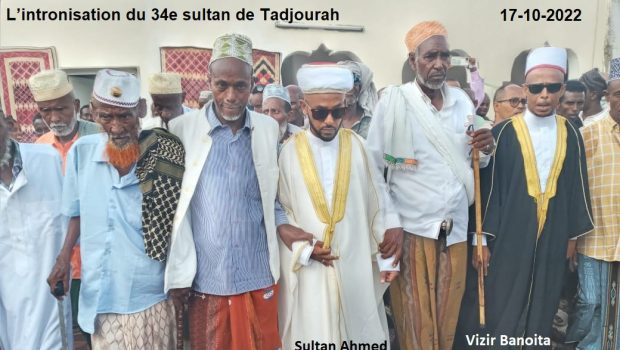 Djibouti : Dardar Ahmed Chehem Ahmed, l’intronisation du 34e sultan de Tadjourah.
  Djibouti / Somaliland : Le vieil Ali Abdi fait parler un ex-criminel pour se moquer d’Ismaël Omar Guelleh.
  Djibouti: Lettre ouverte du syndicat des journalistes de la RTD destinée à Guelleh