
Djibouti/US : Ismail Omar Guelleh et Jeffrey Epstein se sont-ils rencontrés au Waldorf Astoria de NY?

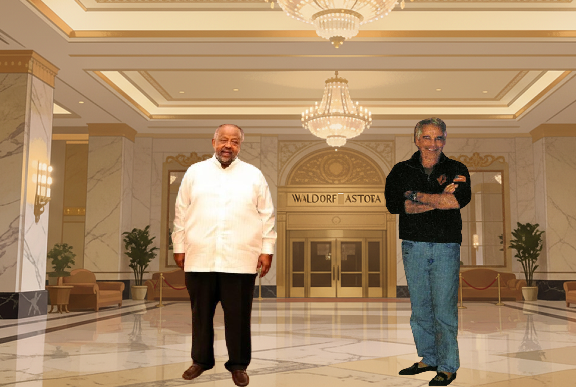
1. Une rencontre au Waldorf Astoria de NY : ce que montrent les emails
Un courriel daté du 24 septembre 2011, envoyé par Sultan Bin Sulayem à Jeffrey Epstein, décrit clairement l’organisation d’un rendez-vous avec le « Djibouti president » au Waldorf Astoria, à New York, en pleine semaine de l’ONU dont Ismail Omar Guelleh y avait participé.
Sultan y écrit : « I am meeting Djibouti president tomorrow at 12:15 at his suit at Waldorf Astoria I told him I will bring a friend it will be interesting for you to meet him », précisant la date (le 25 septembre 2011 à 12h15), le lieu (la suite du président au Waldorf Astoria) et le fait qu’Epstein est ce « friend » qu’il souhaite lui présenter (réf. EFTAR1_00526816 / EFTA02021172).
Ce message répond à un courriel d’Epstein du 23 septembre 2011 (« what are you doing.. tonight. ? tomorrow. i will leave at 4.. lots of intersting people. »), montrant qu’Epstein est alors disponible à New York et intéressé par ces rencontres de haut niveau.
Il établit qu’un rendez-vous trilatéral – Bin Sulayem, le président de Djibouti (Ismaïl Omar Guelleh) et Epstein – était programmé et que le président acceptait la présence d’un « ami » présenté comme invité.
2. Un lien à dissimuler : l’ombre de Boreh
Cinq jours plus tard, le 29 septembre 2011, Sultan Bin Sulayem adresse un nouvel email à Epstein : « Plz don’t mention to Boreh you met Djibouti president as they both hate each other » (réf. EFTA00920741).
Ce message, envoyé de Sultan à Jeffrey Epstein, indique explicitement deux éléments : d’une part, Bin Sulayem considère comme acquise – ou du moins plausible – la rencontre entre Epstein et le président djiboutien ; d’autre part, il demande à Epstein de garder cette entrevue secrète vis‑à‑vis de « Boreh », présenté comme l’ennemi personnel du chef de l’État.
Ce « Boreh » renvoie très vraisemblablement à Abdourahman Mohamed Mahmoud Boreh, homme d’affaires djiboutien, ancien proche d’Ismaïl Omar Guelleh devenu un ex-argentier en exil et engagé dans un contentieux violent avec le régime, notamment sur le contrôle des infrastructures portuaires.
Le fait que Bin Sulayem écrive « as they both hate each other » laisse entendre qu’il navigue entre deux pôles ennemis du pouvoir djiboutien – le président en exercice et Boreh – et qu’il souhaite éviter qu’Epstein, nouvellement introduit auprès du président, ne compromette cette double relation en évoquant la rencontre devant Boreh.
3. « Our Djibouti friend » et la question des filles
Un autre courriel, daté du 3 septembre 2011 et envoyé cette fois par Jeffrey Epstein à Sultan Bin Sulayem, éclaire le rôle d’un tiers djiboutien dans leur cercle.
Epstein y écrit : « our djibouti friend was a lot of fun, he canceled the girls he had coming„ im not sure why? » (réf. EFTA00918605 / EFTAR1_00249716).
Ce message confirme plusieurs points :
- Epstein et Bin Sulayem partagent un « ami djiboutien » suffisamment proche pour être désigné comme « our djibouti friend » ;
- cet ami avait prévu de faire venir des « girls » et a annulé ces venues à la dernière minute ;
- Epstein, connu pour son usage systématique de jeunes femmes dans son environnement social et sexuel, relève ce détail comme une anomalie, ce qui suggère que la fourniture de « girls » faisait partie des attentes implicites de la soirée.
En l’état, les emails ne nomment pas ce « Djibouti friend » et ne disent pas qu’il « livre » effectivement des filles à Epstein : ils indiquent seulement qu’il avait « des filles » qui devaient venir, puis qu’il a annulé.
Le récit de type magazine repris dans le même ensemble documentaire mentionne, de façon générale, que des collaborateurs et « co‑conspirators » d’Epstein étaient chargés de lui amener des « massage girls », et que plusieurs d’entre eux ont été protégés par l’accord de non‑poursuite fédéral.
Cependant, ce texte ne relie jamais ce réseau logistique aux acteurs djiboutiens, et aucune pièce publiée par le Department of Justice n’attribue formellement un rôle de fournisseur de filles à un responsable ou intermédiaire djiboutien identifié par son nom.
Ainsi, à partir des seules pièces disponibles, on peut dire qu’un « ami djiboutien » de Bin Sulayem et d’Epstein gravite dans cet univers et que des « girls » devaient être présentes lors d’une rencontre avec lui, mais on ne peut pas affirmer juridiquement qu’il est un proxénète ou un « fournisseur de filles » d’Epstein sans sortir du cadre probatoire des documents.
4. Un faisceau d’indices, pas une preuve définitive
Les archives publiées sous l’Epstein Files Transparency Act montrent qu’Epstein recevait régulièrement, dans son « dining room » new‑yorkais, une succession de dirigeants politiques, ministres, banquiers centraux et milliardaires, y compris des « controversial head of state » bénéficiant d’une escorte policière.
Un passage de ce récit évoque un dîner où Epstein discute avec « the former director of ports in the semi‑rouge state of Djibouti » et échange avec lui des souvenirs de prison, ce qui confirme des liens suivis avec des élites djiboutiennes – mais là encore, sans mention nominale d’Ismaïl Omar Guelleh.
Mis bout à bout, les éléments suivants ressortent des documents :
- en septembre 2011, Sultan Bin Sulayem annonce à Epstein un rendez‑vous avec le « Djibouti president » à sa suite du Waldorf Astoria, et propose d’y amener Epstein comme « friend » (EFTAR1_00526816 / EFTA02021172) ;
- quelques jours plus tard, il demande expressément à Epstein de ne pas parler de cette rencontre à « Boreh », en raison de la haine mutuelle entre Boreh et le président (EFTA00920741) ;
- au même moment, Epstein décrit à Bin Sulayem un « Djibouti friend » qui avait prévu des « girls » pour une soirée, avant de les annuler (EFTA00918605 / EFTAR1_00249716) ;
- les documents publics du DOJ confirment par ailleurs l’habitude d’Epstein d’utiliser des cercles d’intermédiaires pour attirer et faire venir des jeunes femmes, parfois mineures, mais sans désigner un interlocuteur djiboutien comme maillon de cette chaîne.
Ces pièces soutiennent fortement l’hypothèse que Jeffrey Epstein a été présenté au président djiboutien Ismaïl Omar Guelleh au Waldorf Astoria, pendant UN Week, à l’initiative de Sultan Bin Sulayem.
Elles montrent aussi la volonté de cacher cette relation à Abdourahman Boreh, ce qui situe Epstein au cœur d’un triangle sensible mêlant le pouvoir djiboutien, un argentier exilé et un grand acteur émirati. Ils constituent un faisceau d’indices très consistant, que seule une enquête complémentaire – auditions, productions d’archives complémentaires, recoupements avec d’autres lots de fichiers DOJ – pourrait trancher définitivement.
Hassan Cher
The English translation of the article in French.
Djibouti/US: Did Ismail Omar Guelleh and Jeffrey Epstein meet at the Waldorf Astoria in New York?
1. A meeting at the Waldorf Astoria in New York: what the emails show
An email dated 24 September 2011, sent by Sultan Bin Sulayem to Jeffrey Epstein, clearly describes the organization of a meeting with the “Djibouti president” at the Waldorf Astoria in New York, during UN Week, which Ismail Omar Guelleh was attending.
Sultan writes:
“I am meeting Djibouti president tomorrow at 12:15 at his suit at Waldorf Astoria I told him I will bring a friend it will be interesting for you to meet him”,
specifying the date (25 September 2011 at 12:15), the location (the president’s suite at the Waldorf Astoria), and the fact that Epstein is the “friend” he intends to introduce (refs. EFTAR1_00526816 / EFTA02021172).
This message is a reply to an email from Epstein dated 23 September 2011 (“what are you doing.. tonight. ? tomorrow. i will leave at 4.. lots of intersting people.”), showing that Epstein was in New York at the time and interested in high-level meetings.
The exchange establishes that a trilateral meeting—between Bin Sulayem, the President of Djibouti (Ismail Omar Guelleh), and Epstein—was scheduled, and that the president had accepted the presence of a “friend” introduced as a guest.
2. A relationship to conceal: the Boreh shadow
Five days later, on 29 September 2011, Sultan Bin Sulayem sent another email to Epstein:
“Plz don’t mention to Boreh you met Djibouti president as they both hate each other” (ref. EFTA00920741).
This message explicitly conveys two points. First, Bin Sulayem treats the meeting between Epstein and the Djiboutian president as a given—or at least as having plausibly occurred. Second, he asks Epstein to keep the encounter secret from “Boreh,” described as the personal enemy of the head of state.
This “Boreh” almost certainly refers to Abdourahman Mohamed Mahmoud Boreh, a Djiboutian businessman and former close associate of Ismail Omar Guelleh, later exiled and engaged in a bitter legal and political conflict with the regime, notably over control of port infrastructure.
Bin Sulayem’s wording—“as they both hate each other”—suggests that he operates between two opposing poles of Djiboutian power—the sitting president and Boreh—and seeks to prevent Epstein, newly introduced to the president, from jeopardizing this dual relationship by mentioning the meeting to Boreh.
3. “Our Djibouti friend” and the question of girls
Another email, dated 3 September 2011, this time sent by Jeffrey Epstein to Sultan Bin Sulayem, sheds light on the role of a Djiboutian third party within their circle.
Epstein writes:
“our djibouti friend was a lot of fun, he canceled the girls he had coming, im not sure why?”
(refs. EFTA00918605 / EFTAR1_00249716).
This message confirms several points:
- Epstein and Bin Sulayem share a “Djibouti friend”, close enough to be referred to as “our Djibouti friend”;
- this individual had planned to bring “girls”, and canceled their arrival at the last minute;
- Epstein—known for his systematic use of young women in his social and sexual environment—notes this cancellation as an anomaly, suggesting that the presence of “girls” was part of the implicit expectations of the gathering.
At this stage, the emails do not name this “Djibouti friend” and do not state that he actually supplied girls to Epstein; they merely indicate that he had girls expected to attend and then canceled.
The magazine-style narrative included in the same documentary corpus generally states that Epstein’s associates and “co-conspirators” were tasked with bringing him “massage girls,” and that several of them were protected by the federal non-prosecution agreement.
However, this text never links this logistical network to Djiboutian actors, and no document released by the Department of Justice formally attributes the role of supplier of girls to a named Djiboutian official or intermediary.
Accordingly, based solely on the available documents, it can be said that a Djiboutian associate of Bin Sulayem and Epstein operated within this milieu and that girls were expected to be present at a meeting with him—but it cannot be legally asserted that he was a pimp or a “supplier of girls” for Epstein without exceeding the evidentiary scope of the documents.
4. A body of circumstantial evidence, not definitive proof
Archives released under the Epstein Files Transparency Act show that Epstein regularly hosted, in his New York dining room, a succession of political leaders, ministers, central bankers, and billionaires, including “controversial heads of state” accompanied by police escorts.
One passage refers to a dinner during which Epstein speaks with “the former director of ports in the semi rouge state of Djibouti” and exchanges prison memories with him—confirming sustained ties with Djiboutian elites, though again without naming Ismail Omar Guelleh.
Taken together, the following elements emerge from the documents:
- in September 2011, Sultan Bin Sulayem informs Epstein of a meeting with the “Djibouti president” at the president’s suite at the Waldorf Astoria and proposes bringing Epstein as a “friend” (EFTAR1_00526816 / EFTA02021172);
- a few days later, he explicitly asks Epstein not to mention this meeting to Boreh, due to the mutual hatred between Boreh and the president (EFTA00920741);
- at the same time, Epstein describes to Bin Sulayem a “Djibouti friend” who had planned to bring “girls” to an evening gathering before canceling them (EFTA00918605 / EFTAR1_00249716);
- public DOJ documents confirm Epstein’s habitual reliance on intermediary networks to attract and bring young women—sometimes minors—without identifying any Djiboutian interlocutor as a link in that chain.
These materials strongly support the hypothesis that Jeffrey Epstein was introduced to President Ismail Omar Guelleh of Djibouti at the Waldorf Astoria during UN Week, at the initiative of Sultan Bin Sulayem.
They also demonstrate a clear intention to conceal this relationship from Abdourahman Boreh, situating Epstein at the center of a sensitive triangle involving Djiboutian power, an exiled financial powerbroker, and a major Emirati actor.
They constitute a highly consistent body of circumstantial evidence, which only further investigation—hearings, additional archival disclosures, and cross-referencing with other DOJ file releases—could conclusively resolve.
Hassan Cher


 Previous Article
 Next Article
 Éthiopie : Affrontement entre Oromo et Amhara à Dire Dawa le soir du vendredi 25 octobre 2019.
  Éthiopie : Les affrontements reprennent entre Les Forces de défenses nationales éthiopiennes et le Front de Libération Oromo.
  Afrique de l’Est/Asie du Sud-Ouest : Riyad et Téhéran rétablisse leurs relations diplomatiques et Pékin élargie sa zone d’influence.
  Le régime de Guelleh sous le feu des critiques : bataille des chiffres et guerre de récits dans la Corne de l’Afrique
  Djibouti : Guelleh à Luanda — la grande mise en scène “sécurité & coopération”
  Djibouti / Iran / Somaliland : Comment le régime djiboutien aide l’Iran à contourner les sanctions américaines
  Somalie : La branche de Mogadiscio du service des renseignements somaliens dénonce leur impuissance devant les trafics d’explosif et d’arme au port de…
  Djibouti/CORONAVIRUS : Confinement contre la propagation du Coronavirus ou simulation de coup d’État ?