Corne de l’Afrique : Ismaïl Omar Guelleh face aux frappes américaines et à la question du Somaliland

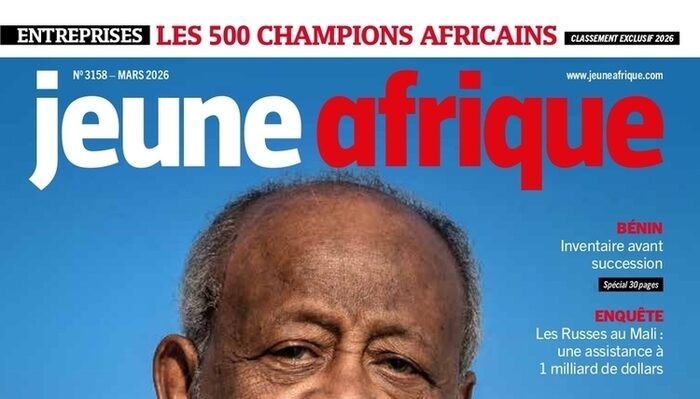
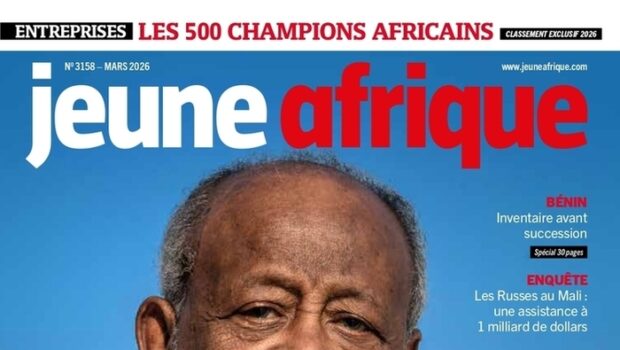
Dans une interview accordée à Jeune Afrique (n°3158, mars 2026), le président djiboutien Ismaïl Omar Guelleh (IOG) adopte un ton particulièrement offensif sur deux dossiers majeurs : les frappes américaines en Somalie et la reconnaissance du Somaliland par Israël (pages 37 et 36 de Jeune Afrique). À travers ses déclarations, il accuse explicitement les États-Unis de provoquer des victimes civiles en ciblant les combattants d’Al-Shabaab et se positionne comme un acteur central des équilibres régionaux, allant jusqu’à apparaître, par moments, comme un porte-parole officieux de Mogadiscio.
1. Des frappes américaines jugées « aveugles » et contre-productives
Interrogé par notre confrère François Soudan sur l’accélération des frappes américaines contre les Shebabs et l’État islamique en Somalie (plus de 150 depuis le début de 2025 selon Jeune Afrique), Ismaïl Omar Guelleh se montre particulièrement sévère. Le chef de l’État djiboutien dénonce une stratégie qu’il juge dangereuse :
« Les Américains ne comprennent pas que procéder à des frappes sans consulter ni informer le gouvernement somalien et les pays voisins concernés, comme Djibouti, ne sert à rien », assène-t-il.
Il va plus loin en évoquant le lourd tribut civil de ces opérations :
« Expédier des missiles pratiquement à l’aveugle sans se soucier des victimes civiles collatérales n’est pas une solution. »
En dénonçant des frappes « à l’aveugle », Guelleh dépasse la simple réserve diplomatique : il met en cause la méthode américaine et l’usage de réseaux d’informateurs « rémunérés » qui « racontent ce qu’ils veulent entendre ». Cette accusation suggère un déficit de renseignement fiable et une externalisation hasardeuse de la décision militaire américaine.
Selon lui, l’erreur de Washington serait de s’appuyer sur des intermédiaires douteux plutôt que de coopérer avec ceux qui « connaissent le terrain ». Et qui mieux que Djibouti, engagé militairement en Somalie, pour revendiquer cette expertise ?
Djibouti, acteur militaire sur le terrain
La critique est d’autant plus notable que Djibouti est lui-même engagé en Somalie. Le président rappelle que son pays a envoyé un contingent au sein de la mission de l’Union africaine, connue sous le nom d’AMISOM (aujourd’hui ATMIS). Les troupes djiboutiennes sont déployées depuis 2011 dans des zones stratégiques du centre de la Somalie.
Dès lors, une question s’impose : si Djibouti et ses forces « connaissent le terrain » et savent où se cachent les combattants d’Al-Shabaab et de l’État islamique en Somalie, pourquoi ne procèdent-ils pas eux-mêmes à des bombardements ou à des frappes ciblées ?
Depuis 2022, l’armée djiboutienne dispose de drones Bayraktar TB2, système aérien sans pilote (UCAV) de moyenne altitude et longue endurance (MALE), produit par la société turque Baykar. Ces drones ont déjà été utilisés sur le territoire national, notamment dans le nord du pays, lors d’opérations ayant affecté des civils djiboutiens de l’ethnie afar.
Ainsi, Guelleh adopte une posture paradoxale : il dénonce la méthode américaine tout en évitant d’assumer lui-même une stratégie offensive contre Al-Shabaab et l’État islamique en Somalie. Cette ambiguïté nourrit l’idée d’un calcul politique, où la critique publique de Washington coexiste avec une prudence stratégique sur le terrain.
2. Une condamnation virulente d’Israël
L’autre grand axe de l’interview concerne la reconnaissance du Somaliland par Israël le 26 décembre 2025. Le Somaliland, territoire autoproclamé indépendant depuis 1991 mais non reconnu par la communauté internationale, entretient des relations complexes avec Mogadiscio. Israël, dirigé par Benjamin Netanyahu, aurait selon Guelleh des objectifs « qui n’ont rien de pacifique ».
Le président djiboutien exprime sa crainte de voir s’installer une base militaire israélienne dans le port stratégique de Berbera. Il dénonce également le rôle des Émirats arabes unis, qu’il accuse d’avoir favorisé cette reconnaissance.
Cette posture interroge : agit-il uniquement en président de Djibouti ou en défenseur implicite du projet d’une « Grande Somalie » ? Djibouti partage des liens historiques, linguistiques et sécuritaires étroits avec la Somalie. Mais l’insistance de Guelleh à refuser tout contact avec les autorités du Somaliland, tout en maintenant la frontière ouverte, illustre un alignement marqué sur Mogadiscio.
En définitive, l’interview révèle un dirigeant soucieux de préserver son influence et ses intérêts privés dans une région en recomposition. En accusant les États-Unis de provoquer des victimes civiles, il affirme une autonomie de ton vis-à-vis d’un partenaire stratégique majeur. En dénonçant Israël et les Émirats au Somaliland, il se pose en défenseur intransigeant de l’intégrité territoriale somalienne.
Reste la contradiction centrale : s’il estime que les frappes américaines sont inefficaces et dangereuses, et s’il affirme que ses forces connaissent parfaitement le terrain, pourquoi son armée stationnée en Somalie ne procède-t-elle pas à des frappes ciblées ? Entre dénonciation morale, calcul diplomatique et affirmation d’un leadership régional contesté, Ismaïl Omar Guelleh cherche coûte que coûte à apparaître à la fois comme le garant de « l’exception djiboutienne » et comme un acteur incontournable de la sécurité somalienne.
3. Conclusion
À travers cette interview, Ismaïl Omar Guelleh projette l’image d’un chef d’État déterminé à peser sur les équilibres de la Corne de l’Afrique. Pourtant, derrière cette posture se dessine une stratégie risquée. En s’attaquant frontalement aux États-Unis tout en dépendant de leur présence militaire à Djibouti, il fragilise un partenariat vital pour la sécurité et l’économie nationale et régionale. En s’alignant sans nuance sur Mogadiscio contre le Somaliland, il importe dans l’espace djiboutien des tensions somaliennes susceptibles d’alimenter des fractures internes et régionales.
Son discours, oscillant entre dénonciation des frappes américaines, accusations contre Israël et rivalités avec les Émirats, contribue à polariser davantage une région déjà instable. À force de vouloir incarner simultanément le garant de l’exception djiboutienne et l’arbitre des affaires somaliennes, Guelleh brouille les lignes de la diplomatie djiboutienne et expose son pays à des représailles politiques, économiques ou sécuritaires.
Ainsi, loin d’apparaître comme un facteur d’équilibre, Ismaïl Omar Guelleh donne l’image d’un dirigeant dont les choix et les déclarations peuvent compromettre l’existence même de Djibouti en tant qu’État stable et neutralisé au cœur d’une zone stratégique. En attisant les rivalités internationales et régionales, il risque de transformer Djibouti, aujourd’hui carrefour géopolitique, en épicentre de tensions majeures dans la Corne de l’Afrique.
Hassan Cher
The English translation of the article in French.
Horn of Africa: Ismaïl Omar Guelleh Confronts U.S. Airstrikes and the Somaliland Question
In an interview with Jeune Afrique (No. 3158, March 2026), Djiboutian President Ismaïl Omar Guelleh (IOG) adopts a particularly forceful tone on two major issues: U.S. airstrikes in Somalia and Israel’s recognition of Somaliland (pages 7 and 6 of Jeune Afrique). Through his statements, he explicitly accuses the United States of causing civilian casualties while targeting Al-Shabaab fighters and positions himself as a central actor in regional dynamics, at times appearing as an unofficial spokesperson for Mogadishu.
1. U.S. Airstrikes Deemed “Blind” and Counterproductive
Questioned by journalist François Soudan about the acceleration of U.S. airstrikes against Al-Shabaab and the Islamic State in Somalia (more than 150 since the beginning of 2025, according to Jeune Afrique), Ismaïl Omar Guelleh delivers a particularly severe assessment. The Djiboutian head of state denounces what he considers a dangerous strategy:
“The Americans do not understand that carrying out strikes without consulting or informing the Somali government and the neighboring countries concerned, such as Djibouti, serves no purpose,” he asserts.
He goes further by highlighting the heavy civilian toll of these operations:
“Launching missiles practically blindly without regard for civilian collateral casualties is not a solution.”
By condemning “blind” strikes, Guelleh goes beyond a simple diplomatic reservation: he directly challenges the American method and the reliance on “paid informant networks who tell them what they want to hear.” This accusation implies a deficit of reliable intelligence and a hazardous outsourcing of U.S. military decision-making.
According to him, Washington’s mistake lies in relying on questionable intermediaries rather than cooperating with those who “know the terrain.” And who better than Djibouti—militarily engaged in Somalia—to claim such expertise?
Djibouti as a Military Actor on the Ground
This criticism is all the more notable given that Djibouti itself is engaged in Somalia. The president recalls that his country has deployed a contingent within the African Union mission known as AMISOM (now ATMIS). Djiboutian troops have been stationed since 2011 in strategic areas of central Somalia.
This raises a key question: if Djibouti and its forces “know the terrain” and are aware of where Al-Shabaab and Islamic State fighters are hiding in Somalia, why do they not conduct targeted bombings or airstrikes themselves?
Since 2022, the Djiboutian army has been equipped with Bayraktar TB2 drones, a medium-altitude long-endurance (MALE) unmanned combat aerial vehicle (UCAV) system produced by the Turkish company Baykar. These drones have already been used domestically, particularly in the northern part of the country, during operations that affected Djiboutian civilians of the Afar ethnic group.
Thus, Guelleh adopts a paradoxical stance: he denounces the American method while refraining from assuming an offensive strategy himself against Al-Shabaab and the Islamic State in Somalia. This ambiguity fuels the perception of political calculation, whereby public criticism of Washington coexists with strategic caution on the ground.
2. A Strong Condemnation of Israel
The other major focus of the interview concerns Israel’s recognition of Somaliland on December 26, 2025. Somaliland, a self-proclaimed independent territory since 1991 but not recognized by the international community, maintains complex relations with Mogadishu. Israel, led by Benjamin Netanyahu, is said by Guelleh to have objectives “that are anything but peaceful.”
The Djiboutian president expresses concern over the possible establishment of an Israeli military base in the strategic port of Berbera. He also denounces the role of the United Arab Emirates, accusing them of having facilitated this recognition.
This posture raises questions: is he acting solely as President of Djibouti, or as an implicit defender of the “Greater Somalia” project? Djibouti shares historical, linguistic, and security ties with Somalia. However, Guelleh’s insistence on refusing any contact with Somaliland authorities, while keeping the border open, reflects a marked alignment with Mogadishu.
Ultimately, the interview portrays a leader intent on preserving his influence and private interests in a region undergoing geopolitical realignment. By accusing the United States of causing civilian casualties, he asserts a tone of autonomy vis-à-vis a major strategic partner. By denouncing Israel and the UAE over Somaliland, he presents himself as an uncompromising defender of Somalia’s territorial integrity.
Yet the central contradiction remains: if he considers U.S. strikes ineffective and dangerous, and if he claims his forces know the terrain perfectly, why does his army stationed in Somalia not conduct targeted strikes itself? Between moral denunciation, diplomatic calculation, and the assertion of a contested regional leadership, Ismaïl Omar Guelleh appears determined at all costs to present himself both as the guarantor of the “Djiboutian exception” and as an indispensable actor in Somali security.
3. Conclusion
Through this interview, Ismaïl Omar Guelleh projects the image of a head of state determined to shape the balance of power in the Horn of Africa. However, behind this posture lies a risky strategy. By confronting the United States while simultaneously depending on its military presence in Djibouti, he weakens a partnership vital to national and regional security and economic stability. By aligning unreservedly with Mogadishu against Somaliland, he imports Somali tensions into Djiboutian space, potentially fueling internal and regional fractures.
His discourse—oscillating between denunciations of U.S. airstrikes, accusations against Israel, and rivalries with the UAE—further polarizes an already fragile region. In attempting to embody both the guardian of Djibouti’s “exceptionalism” and the arbiter of Somali affairs, Guelleh blurs the lines of Djiboutian diplomacy and exposes his country to political, economic, and security retaliation.
Rather than appearing as a stabilizing force, Ismaïl Omar Guelleh emerges as a leader whose choices and declarations risk undermining Djibouti’s very existence as a stable and neutral state at the heart of a strategic crossroads. By inflaming international and regional rivalries, he risks transforming Djibouti—from a geopolitical hub—into an epicenter of major tensions in the Horn of Africa.
Hassan Cher


 Next Article
 Djibouti/UA/Uganda : L’Afrique de l’Est a tourné le dos à Mahmoud Ali Youssouf « Young man from Djibouti »
  Model Shoot February 2014
  Djibouti : Les G7 (les 7 de Gerissas) accusent Ilyas Moussa Dawaleh, Ministre de l’Economie et des Finances, d’être responsable de la dette colossale de Djibouti.
  Daesh dans la Corne d’Afrique : Analyse des liens entre Daesh Somalie, Salaam Bank et Djibouti, une situation complexe.
  Bamboo Trail In Japan
  Djibouti / Syndicat : Le ministère de l’emploi organisation une activité syndicale avec le FSM sur ordre de la présidence djiboutienne.
  Djibouti : L’accord secret de Paris et comment Boreh manipule l’opposition djiboutienne via Mohamed Ahmed Abdillahi.
  Djibouti/USA : La marine américaine développe ses installations militaires à Djibouti.